Showing posts with label Preserving. Show all posts

Thursday, 22 August 2013

Mustard Making!


We made mustard! This was something that had been on our to-do list for a while, and with sausage season just around the corner, we decided it was time to give it a try. How we usually do things in the Beehive is that we choose a recipe, make a list of ingredients, and then call dibs on whatever we have already in our homes. We had everything that was needed on hand except the actual mustard seeds, which were purchased from Dilly’s at the Farmers Market (the yellow seeds) and Nations (the black seeds).


We all sat around the table, passed around the ingredients, and put them into our little jars, each making one cup of each mustard. This whole process took…about 15 minutes. For some silly reason we thought this whole mustard-making-process was going to be intimidating and tricky, but it was literally just measuring ingredients into a jar…and that’s it! So we ordered some pizza, grabbed our crafts, and had an impromptu Beehive meeting.


Then we waited 3-4 days, blended our concoctions at home, and reported on our findings. A few people found the lavender mustard a bit acidic, which might be because we substituted the water for white wine (assuming everything is better with wine – maybe not?), but other than that, the mustards turned out just lovely. I blended the yellow mustard and it was perfect (so flavorful!) but I’ve left my lavender mustard unblended for a few weeks, just to see what happens with some more time.
Here are the recipes we used:
Know of any tried-and-true mustard recipes? Feel free to share them in the comments!

Wednesday, 31 August 2011

Canning Peaches


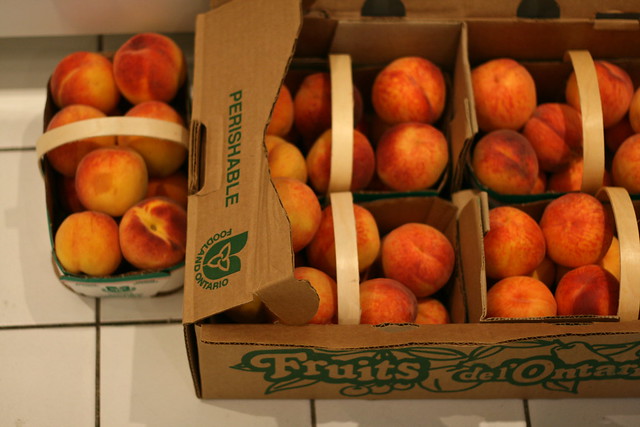
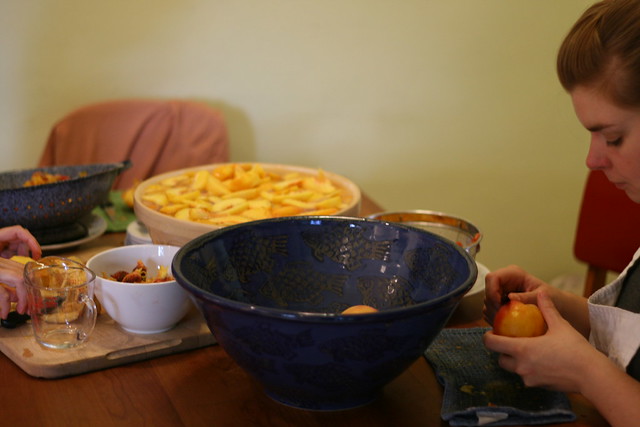
On Sunday a few of us got together at Thea's to can peaches! This wonderful fruit is at its best right now and we really wanted to capture its deliciousness and preserve it for future enjoyment.


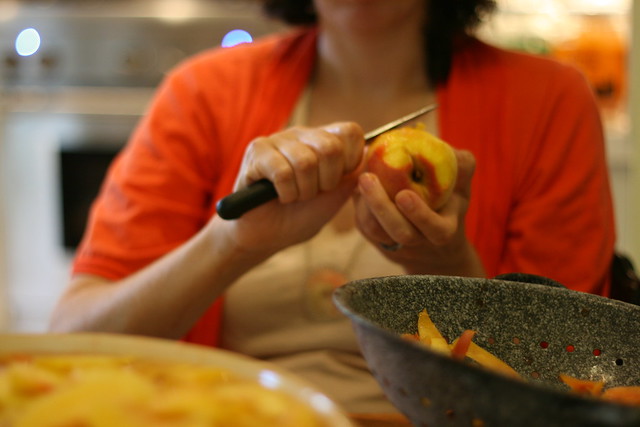
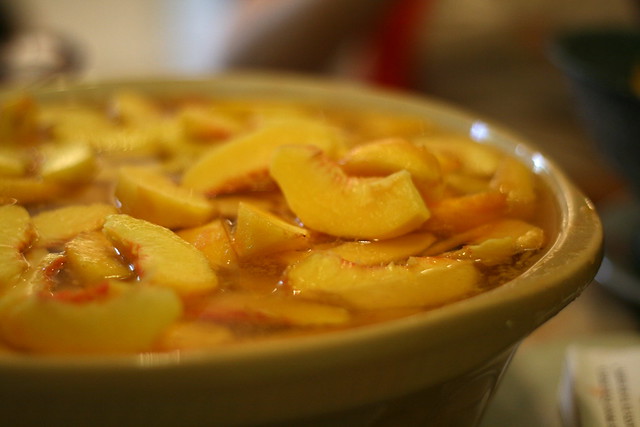
The most time consuming and messy part of canning peaches is the peeling and slicing bit. The more hands helping out, the better! In order to make the peaches easy to peel, we blanched them in boiling water for 30-50 seconds. Then we peeled them, sliced them, and put the slices in a bath of water with lemon juice in it. The lemon prevents the fruit from darkening unattractively.

It's best to can peaches that are just beginning to soften. If they're too soft, they may just fall apart when cooked. If they're too hard, they're a major pain in the derriere to peel.


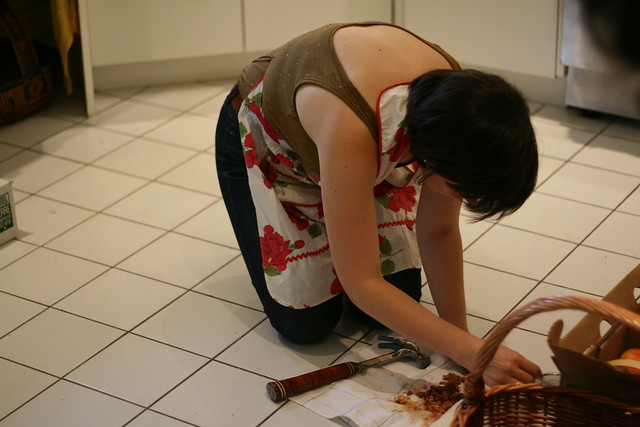
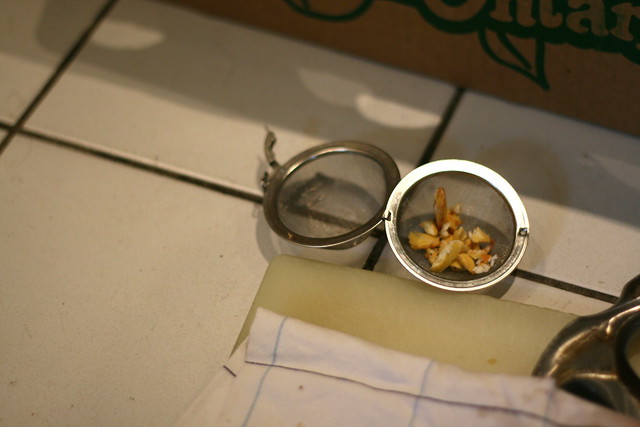
Thea informed us that peach pits contain pips that have an almondy scent and flavour (peaches and almonds are related after all). So she cracked a few pits open with a hammer, and put some pips in a tea infuser, which we placed in the syrup to give it a slight almond flavour. Yum!


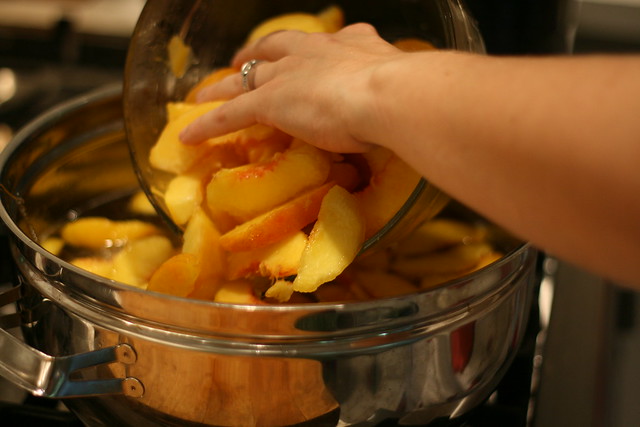
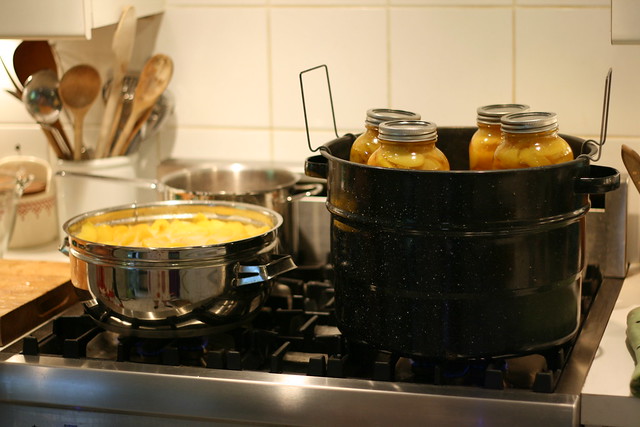
In batches, we added the sliced peaches to our sugar syrup mixture. We made a medium syrup, a combination of 6 cups of water with 3 cups of sugar. The peaches were cooked in the syrup for 5 minutes. This is the "hot pack" method of canning, since the fruit is heated before being canned. It's the most commonly used method for preserving fruit since it is a bit safer, and makes it easier to get the fruit in the jars. You can also "cold pack" or "raw pack" the fruit by putting it in without cooking it in the syrup, and then pouring the hot syrup on after.


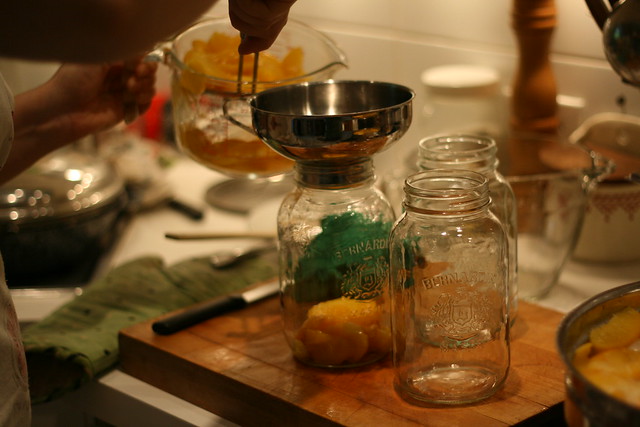
With a slotted spoon, we ladled the peaches into hot sterilized jars, then added the syrup until there was about 1'' headspace. Wide mouthed funnels are a canner's best friend.


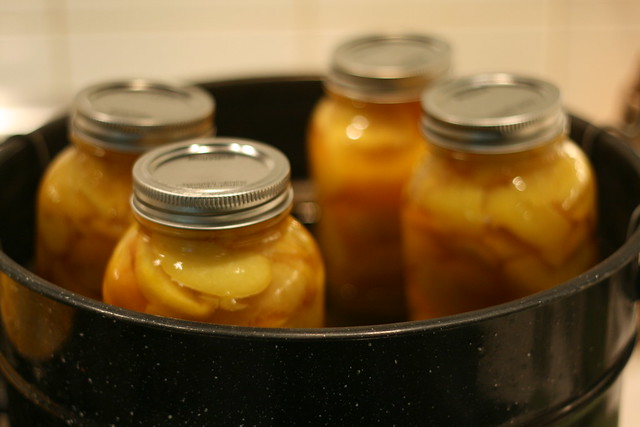
We processed the canned peaches in the canner for about 20 minutes.


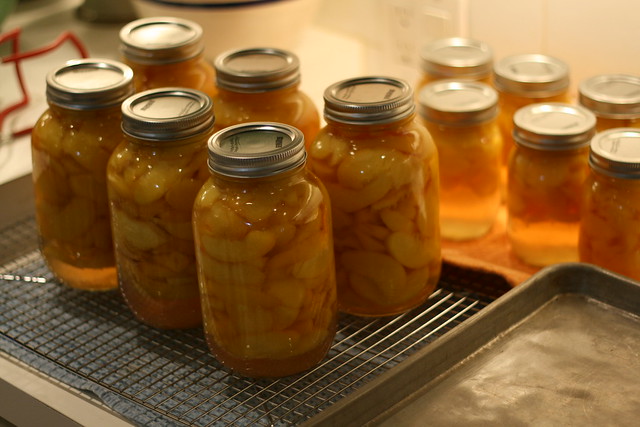
Et voila! Peaches galore! They will provide a wonderful taste of summer in the cold dark days of winter. Yum.

Friday, 22 July 2011

Pea Preparation

Several weeks ago a few of us were able to get up to the farm, and after an evening of much needed weeding we rewarded ourselves by pick some peas. We ended up with so many peas (about a bushel and a half) that I decided to take the opportunity to bring a little over half a bushel home to freeze some so that we could have tasty peas all year round.
First you need to shuck the peas. We did this while watching Harry Potter and the Deathly Hallows Part 1 to get ready to see Part 2. I have to say that fresh peas might be a better movie snack than popcorn.


To properly prepare peas for freezing (and most other vegetables and fruit) they have to be blanched to kill the enzyme that causes the peas to lose their freshness. To blanch the peas they need to be submerged in boiling water for 90 seconds.


I put a few handfuls of peas into a metal steaming basket to contain them so that I didn’t have to chase the loose peas around with a slotted spoon in a boiling pot of water.


Once the peas had been in the boiling water for 90 seconds I dropped the basket into a bowl of cold water to stop the cooking process.


After cooling in the first bowl of water for about 30 seconds I would dump the peas out of the basket into a second bowl of cold water. I would keep the peas here until the next batch of peas had come out of the boiling water.


The peas would then be poured into a strainer, then onto a paper towel to blot off the excess water.


(To me it looks like the peas are in the shape of North America, anyone else see that?)

Once the peas have been dried off they can be spread out on to a cookie sheet to freeze. When the peas have frozen solid they can be collected into sealable container. Freezing them this way allows the peas freeze separately, not stuck to their neighbour so you can take as many as you want to add to your meal.


I had so many peas that I had to make a second layer on both my cookie sheets with tin foil.
How do you use your peas throughout the year?

photos by Courtney Lakin