Showing posts with label Onion Skins. Show all posts

Wednesday, 13 July 2011

Hip to be Square: Granny Square Blanket!

Way back in the winter our fellow bee Courtney was kind (and patient!) enough to teach a few of us how to crochet simple granny squares at The Brain's regular Knit Night. In general I tend to gravitate towards simple projects that I can pick up and put down easily or do while watching a movie; it makes me feel like I'm being productive! Granny squares were the perfect project to fill my idle hands and use up that ever growing yarn stash. Slowly but surely, one square at a time, you're bound to build up enough little squares to make an afghan without having to tote around a large and daunting project.


Jenna Rose used some gorgeous light airy colors for her granny squares (above).

I love natural colors of wool and using Canadian or hand spun yarns, so for my project I used up some hand spun Manos del Uruguay left over from an old project and purchased some Briggs and Little yarn while on christmas vacation in Nova Scotia. I love Briggs and Little because it's a Canadian company and is very inexpensive for pure Canadian wool, which they buy direct from the producer. It makes an ideal yarn for natural dyeing as well as for large projects like blankets.

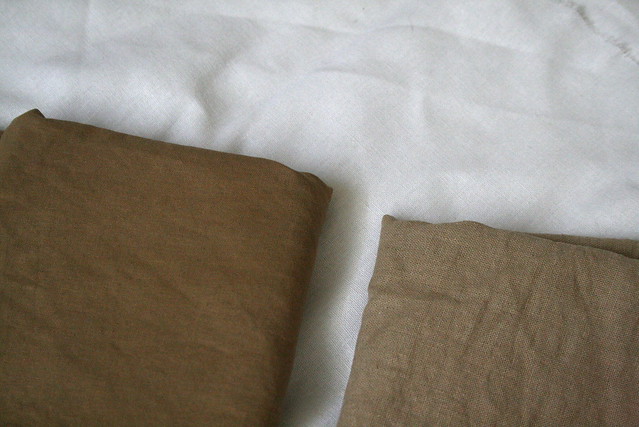
I started by dyeing some of the wool with onion skins, one of the easiest and most rewarding natural dyes to work with. After saving up my onion skins until i had enough to fill a pot, I dyed two balls of natural white "Heritage" (2 ply) yarn from the Briggs and Little line. I boiled the onion skins 'til the water was full of their dark rust color, then I filtered them out and placed the water back on to boil. I dyed one skein first which soaked up the strong darker yellow right away - the ball in the back of the picture below. Then I dyed the second skein in the remaining water - this is called an exhaust bath. The water is not as potent with dye but this second round will produce a softer, often more beautiful, shade of yellow.


To go with the natural yellows, I picked up some Heritage yarns in shades of grey and started making the granny squares that Courtney had taught me. The stitch was surprisingly simple. Starting with a small circle made with a few chain stitches and then working outwards with little "shells" of three double-crochet stitches followed by a few chain stitches you eventually get a square. There are many great books and videos on making granny squares and tons of variations of patterns but I thought I'd stick to the simple square, mixing up my colors to make every square just a little bit different from the last. Soon enough (and thanks to a couple seasons of "Mad Men" that I definitely needed to catch up on...) I had a big pile of granny squares ready to be stitched together into a blanket.


As I made up the squares I added in some bright fun bits of left over wool in my stash to fill out the blanket and add some different colors!

Using the same basic pattern of three double crochet stitches I edged each square, and stitched them together by picking up the edge of the previous square as I went. When I was all done I edged the whole blanket with a gradation of grey to black yarns to frame the whole thing making the lighter grays and yellows pop in the middle of the blanket.

And just in time for summer weather, voila! the perfect picnic blanket for Bay Front Park!


I think I'll spend my whole summer right here.


photos by Jenna Rose and Anna Taylor

Tuesday, 22 March 2011

Pysanky!


Last Monday evening Hollie was kind enough to welcome us around the harvest table in her lovely home to try our hand at traditional egg decorating. Since I was a kid, Easter has been my favorite holiday. There's very little pressure, it comes with spring AND there's chocolate...what's not to love! With spring - and a late Easter, for those inclined - around the corner, eggs were on our brains and had us thinking of the very impressive craft of pysanky (pih-SAHN-kee). Traditionally, Ukrainian woman would create effortless-looking decorative eggs by drawing resists in beeswax on the surface of eggs and successively dipping them into various dyes, layering intricate pattern over intricate pattern. While some of us remembered childhood attempts at this or similar egg dyeing crafts, none of us really knew what we were doing at all. And let us tell you...it's hard! We were not as instantly expert at this as we thought we would be, but it was a lot of fun!

The endeavor began with a trip to The Ukrainian Store in Dundas. When you go in it's hard not to get distracted by all the fresh locally made specialty foods, after all, they boast the "best perogies in town"...a statement that has since been tested by Beehive members and met with much satisfaction. The owners were extremely friendly, fully stocked in every thing we needed and willing to patiently translate the directions on the bright packages of dye.

The supplies needed were candles, dyes, beeswax and kistkas (KIST-kuh - a simple stylus made from a cone of metal fastened to a small wooden dowel with wire). The Ukrainian store has a variety of sizes of kistkas that produce different thickness of line with the beeswax. They even supply electric ones for the expert hand! Dyes can also be made naturally using plants and vegetables like beets. We gathered onion skins to make a yellow dye using just the same method as for fabric dye.


The Hamilton Public Library was full of beautiful books on the subject, and proved invaluable for inspiration.


We mixed the dyes according to instructions and laid out everything we needed to get started. each of us had a little candle in front of us and our egg to decorate. Some times you can blow out the yoke in your egg ahead of time or - as per tradition - leave it to slowly dry out over a few years.

You start by heating the metal part of your kistka until you can easily scoop out a little beeswax, filling the larger open end. With further heating, the wax should run down into the cone, getting ready flow out onto the egg's surface. I found I had to heat my tool often to keep the wax flowing and TOO often we would heat it too much and a large flow of wax would blob out the end of our tool, muddying our attempts at perfect designs! We had to ditch our pride and realize that straight lines and symmetry come with years of practice.


Where the wax is drawn on a resist was made on the egg so that those areas were left white when we dipped them into our first dyes. After you take it out and pat it dry you can add more wax before dipping the egg in a second color, and so on. Wherever the wax has been put on, the last color dyed will stay resisted until the end. We worked from light colors to dark ones. When we finished, we gently scraped or melted off the wax resists revealing all the bright colors we had captured in our squiggly patterns!

I think we were SUPPOSED to be having a meeting too...but I'm not sure we ever got round to discussing anything.

Some of us have since become addicted to the beautiful end results of this craft, and this week for Knit Night we left our needles and hooks at home and filled a whole table with dyes and candles and set to work on some more eggs. I love our folksy (albeit a bit wonky) attempts!


Photos courtesy of Hollie

Sunday, 13 March 2011

Our Roots, Part III: Natural Dyeing

In addition to pickling and knitting, a number of us Beehive members are also interested in natural dyeing. It is a joy to see the beautiful range of colours you can produce using only natural materials.

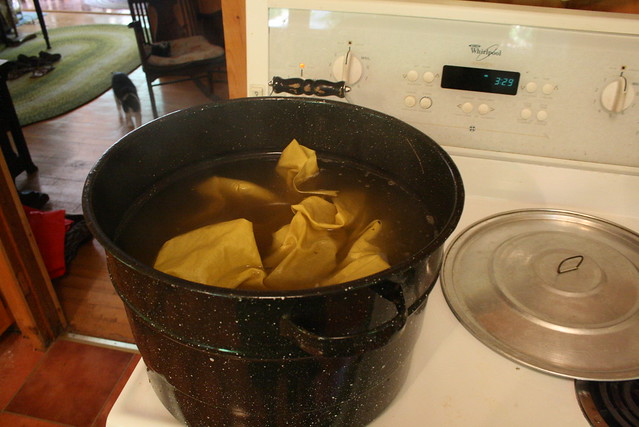
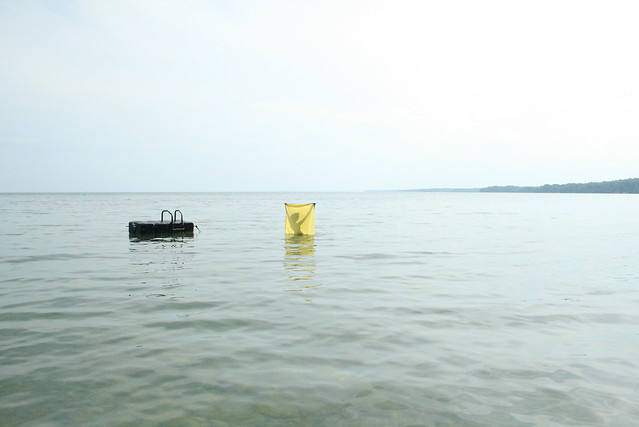
One of my first experiments with natural dyeing was done using golden rod up at my cottage this past summer. Let's just say that having access to a lake is a huge plus! When you get hot and sweaty from letting your plant matter and fabric boil on the stove, you can do the washing out part of the process in the lake while you go for a dip!

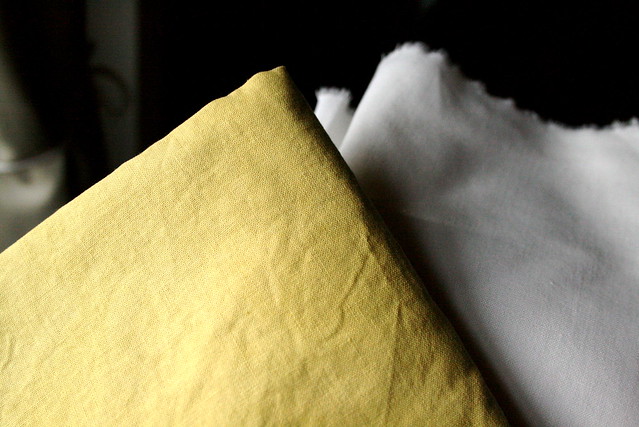
The goldenrod produced a beautiful yellow.

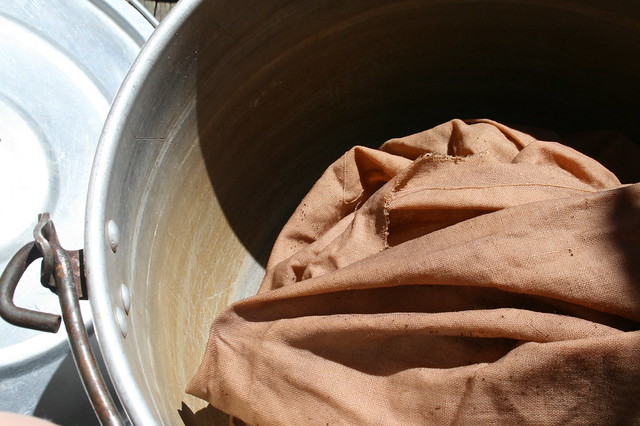
Sumac was my next solo experiment. It produced a lovely brown, but be warned: I think some sort of insect has a tendency to lay it's eggs in sumac. So you might find a whole ton of tiny larvae in your pot when boiling the plant. Kind of gross.

Our first group dyeing session occurred at Thea's house this past fall. I brought some walnuts I'd collected, and Thea supplied cochineal. She got the cochineal from Maiwa, a company located in BC that has a great selection of natural dyes and everything else you need for natural dyeing. And in case you didn't know, cochineal is an insect that lives on the prickly pear cactus that is native to Mexico and some other Central and South American countries. It's ground into a really fine powder for use in dyeing. While it may not be local, it is highly coveted because it produces absolutely gorgeous shades of pink.

We had a lovely time, and our results were great! The pinks and browns that we produced ranged in tone quite a bit, depending on the material that was dyed (protein fibres such as wool pick up dye better than cellulose fibres such as cotton), and whether they were dyed in the first or second use of the dye bath. Using a mordant (like alum, iron, or tannic acid) can also alter and help set the colour.


Anna, a knit night regular, also decided to try her hand at dyeing. She used onion skins to dye some wool yarn, and got lovely results!

We are certainly looking forward to planning some more natural dye days as the weather gets warmer. There's an endless number of materials out in nature that can be used for dyeing, so there's no limit to our experimenting with them.

Photos courtesy of Kate, Hollie, and Anna